
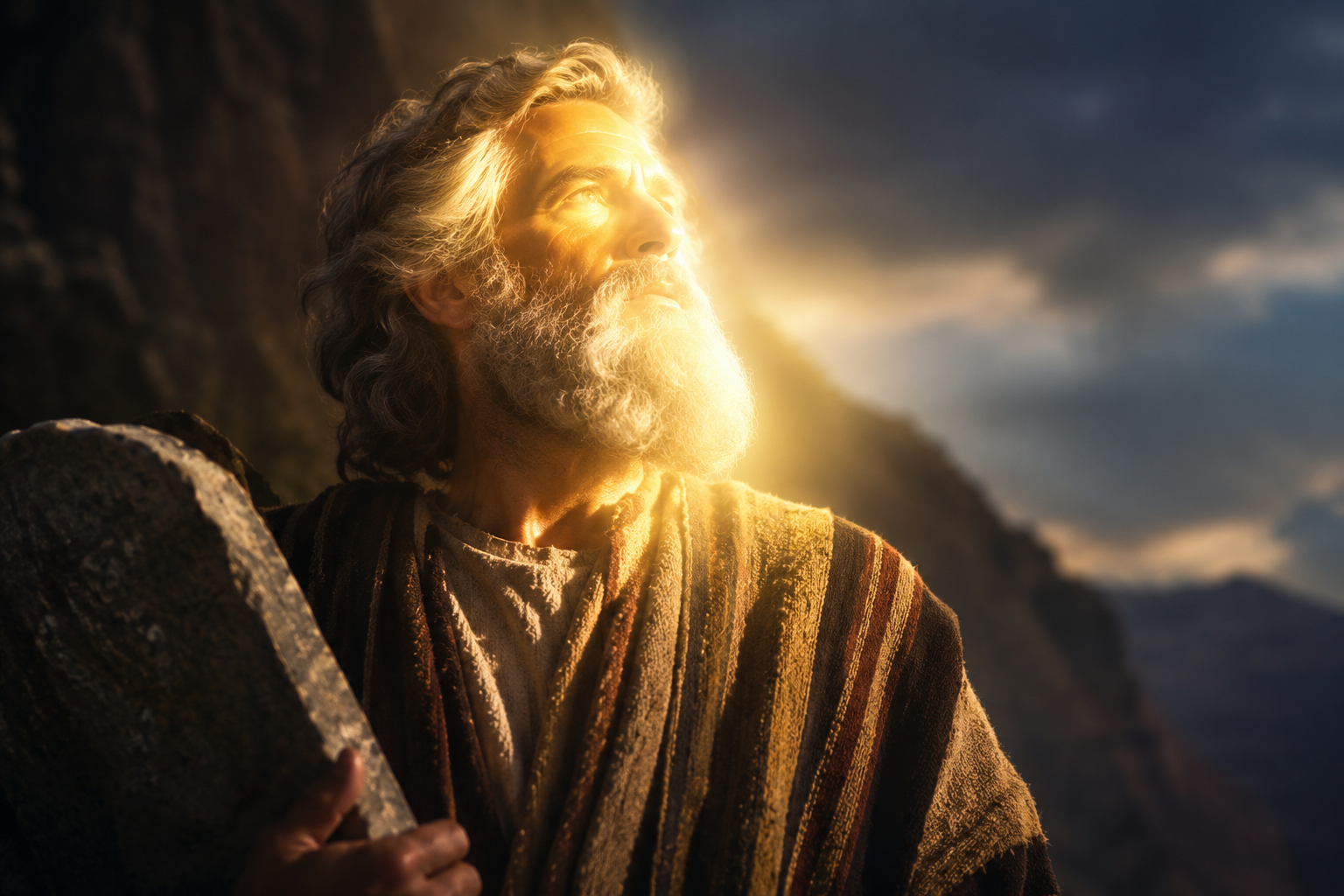
There are moments in Scripture when an image lingers long after the passage has been read. Moses’ veill is one of those images for me. At first it can seem like a strange detail from an ancient story, but Paul sees in it something significant for the life of every believer. The veil speaks of glory, fear, concealment, and ultimately of the greater freedom now given to us in Christ.
In 2 Corinthians 3, Paul takes us back to Mount Sinai and to the shining face of Moses, but he does not leave us there. He shows us that the glory of the old covenant, real though it was, was temporary and fading. By contrast, the glory of the new covenant is greater, lasting, and transforming, because it comes through the Spirit and is centred on Jesus.
This post is an invitation to slow down, to look again, and to ask what it means to live with an unveiled face before God. As we follow Paul’s argument, we will see that the Christian life is not about striving under condemnation, but about beholding Christ, receiving the freedom of the Spirit, and being changed from glory to glory.
My Journey with Moses’ Veil
With that in mind, I’ve been spending time in 2 Corinthians 3, where Paul reflects on the veil Moses wore after receiving the Law and on what that image means for us now in Christ. It is a familiar passage for many Christians, but it is also easy to skim past the details when they do not make immediate sense.
I felt the Lord asking me to camp out in these verses a little longer, so here’s the result of those moments of meditation.
To do that, we’ll begin with the Old Testament story itself and then listen carefully to how Paul interprets it for the Corinthian church.
The Context
Table of Contents
When Moses came down from Mount Sinai with the two tablets of the covenant law in his hands, he was not aware that his face was radiant because he had spoken with the Lord. (Exodus 34:29).
That’s a challenge in itself! If we are spending time with God, we should not be surprised if people we encounter notice a radiance about us. Now when I say it’s a challenge, I don’t mean to be condemned or to try to work something up in our own strength. What I really mean is, are we speaking with the Lord in such a way that we are changed? Do we run off a list of requests and then move on quickly to the next thing to do? I believe God is calling us to spend more time than we think is necessary, even if it’s just a few moments or minutes more, just to rest in his presence and listen.
But back to the story.
Here’s what Paul says in 2 Corinthians 3:7-8:
“Now if the ministry that brought death, which was engraved in letters on stone, came with glory, so that the Israelites could not look steadily at the face of Moses because of its glory, transitory though it was, will not the ministry of the Spirit be even more glorious?”
So Paul is saying something incredible: the Law Moses delivered was not a mistake, and it was not without glory. It absolutely came from God. It revealed his holiness. It exposed sin. It carried such weight and majesty that Moses’ face shone after encountering the Lord. And yet, for all its glory, that ministry could only show people the standard of righteousness; it could not give them the power to fulfil it. In that sense, the Law brought death, because it revealed sin and condemnation without being able to impart the life needed to overcome them. Of course, this does not mean the Law was devoid of mercy. Within the old covenant, God did provide sacrifices, atonement, and a real way for his people to approach him. But even those sacrifices pointed beyond themselves to Christ, because they could not finally remove sin or transform the heart. The Law was glorious, but the ministry of the Spirit is far more glorious. The Spirit does what the Law could never do.
The Ministry of the Spirit is Faith-Based
Stepping out of our passage and into Paul’s letter to the Galatians, we read in Galatians 3:2,
I would like to learn just one thing from you: did you receive the Spirit by the works of the law, or by believing what you heard?
Paul is asking the Galatians to go back to the beginning of their Christian life and remember how it actually started. Did the Spirit come because they had finally performed well enough, obeyed thoroughly enough, or proved themselves worthy enough? No. They received the Spirit by believing what they heard. That matters enormously, because it means the new ministry of the Spirit does not begin with human achievement, but with trust. We do not climb our way up to God through religious effort. We receive what Christ has done by faith. The old covenant exposed what was wrong and demanded righteousness from us. The new covenant gives righteousness to us in Christ and then teaches us to live from that place. This is why Galatians 3 is so strong: Paul will not allow believers to begin by the Spirit and then try to mature by the flesh. The Christian life begins, continues, and grows by faith.
The Ministry of the Spirit Brings Freedom
Verse 17 tells us that,
Where the Spirit of the Lord is, there is freedom.
In Galatians 5:1 Paul says,
It is for freedom that Christ has set us free.
The Spirit frees us to come to God with unveiled faces, to see his glory, and to be changed by him. We now have the presence of God within us, leading us, teaching us, correcting us, empowering us, and transforming us from the inside out.
It’s Law or Spirit
If we take this message seriously, we realise that there is no middle ground for us and no mixture. We can’t celebrate the victory of Jesus fully while still living under legalism. It’s easy for us to do, to become burdened by certain ‘laws’ (not always Old Testament ones) that people put on us or that we put on ourselves. But under the Spirit, if we can embrace the freedom by faith, we begin to see bit by bit that we are actually more glorious even than Moses. We are seated in heavenly places in Christ (Ephesians 2:6) and the same power that raised Christ from the dead lives in us (Romans 8:11; Ephesians 1:19-20). We receive this by faith and not by works and can enjoy the freedom of living by the Spirit.
The Surpassing Glory of the New Covenant
Let’s look more at the old ministry and how it stacks up against what we have today. Verse 9 says,
If the ministry that brought condemnation was glorious, how much more glorious is the ministry that brings righteousness!
Before we undermine the old system, let’s remember it was a system set up by God and it carried great glory. Moses’ veil reminds of that! He went up a mountain, and God gave him the Ten Commandments on two tablets of stone. There were flashes of lightning and peals of thunder, the people trembled with fear, and the glory of the Lord was immense (Exodus 19:16–19; 31:18; 34:29–30). In fact, it’s helpful for us to recognise the enormity of the glory of the old covenant, as the more we can imagine how great and glorious it was, the more incredible a statement it is Paul is making when he says that our current glory is even greater! Look at his next line in verse 10:
For what was glorious has no glory now in comparison with the surpassing glory.
The difficulty we may have in believing this is that the former glory, though inferior, was visible in the physical realm. Moses’ face shone. The people could see it. They could recognise that something of God’s glory had touched him. But the glory we have received in Christ is different. As children of the kingdom, seated with Christ in heavenly places, much of who we are is now hidden in him (Colossians 3:3). It belongs to an unseen realm, and because of that, it has to be received and experienced by faith (2 Corinthians 5:7). Yet that does not make it less real. In fact, Paul’s point is that this unseen glory is greater, higher, and more lasting than anything we could see or experience in the natural realm. This fits with Paul’s wider theology: we fix our eyes not on what is seen but on what is unseen, and we set our minds on things above, not on earthly things (2 Corinthians 4:18; Colossians 3:2). Back to verse 11 and the contrast between the two ministries:
And if what was transitory came with glory, how much greater is the glory of that which lasts!
Another comparison between the glory Moses experienced and our glory is that his was transitory, passing away, fading; ours is permanent and eternal. It’s so great that we can’t fully experience it today. That’s why we move from glory to glory, and there is always more for us to move into because this glory is eternal and infinite. Verse 12:
Therefore, since we have such a hope, we are very bold.
Hope Makes Us Bold
Paul begins verse 12 with hope: “Therefore, since we have such a hope…” The old covenant came with glory, but it was fading. The ministry of the Spirit comes with a greater glory, and this glory lasts. That is our hope. We are not hoping in something fragile, temporary, or dependent on our own ability to keep ourselves acceptable to God. We are hoping in the finished work of Christ, the gift of the Spirit, and the promise that the glory now at work in us is not passing away. It is increasing, deepening, and carrying us toward fullness. Christian hope is not wishful thinking; it is confidence rooted in what God has already done and in what the Spirit is already doing in us.
And because we have this kind of hope, Paul says, “we are very bold.” The boldness is the freedom to come before God without fear. Under the old covenant, the people saw the glory on Moses’ face and were afraid to come near. Then, only a purified priest could enter God’s presence under the Law of Moses. But under the new covenant, by the death of Christ and the veil that was torn in two from top to bottom, the Spirit now brings us near and teaches us to stand in the presence of God with unveiled faces. We can speak plainly, pray honestly, worship freely, and live courageously before God because our confidence is not in ourselves, but in Christ.
Why We Are Not Like Moses
We think of Moses as a great leader, and rightly so. But thinking about this hope and this boldness, we may begin to see how different we are. Paul develops this in verse 13 next:
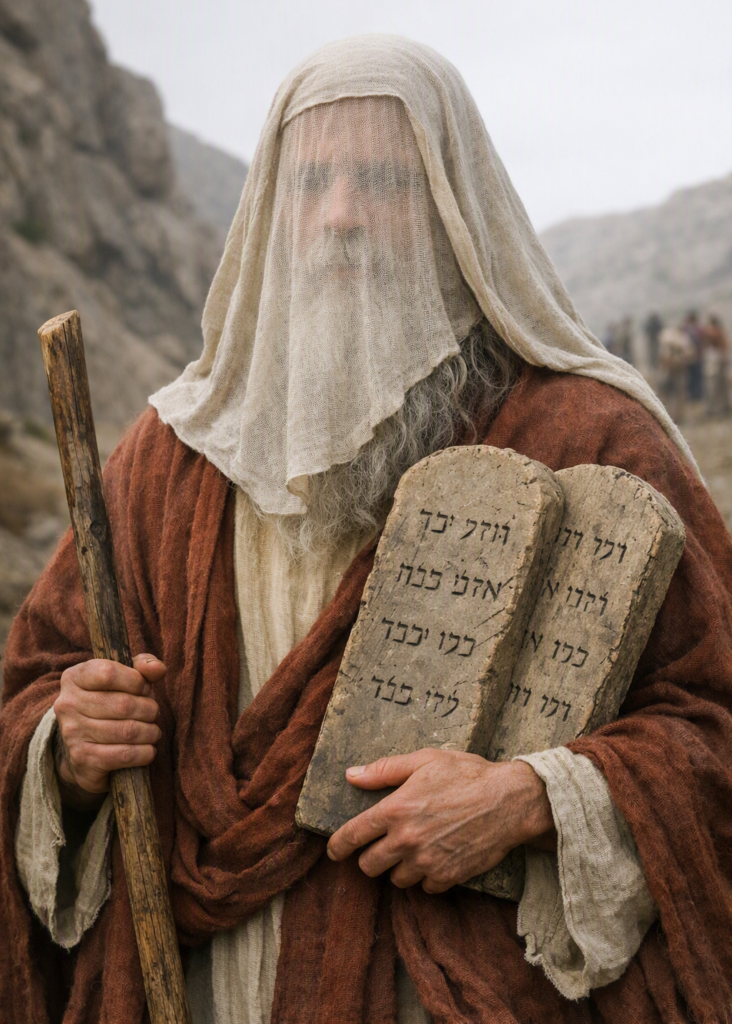
We are not like Moses, who would put a veil over his face to prevent the Israelites from seeing the end of what was passing away.
How are we not like Moses? He communed with God, as can we. He talked with God face to face, as can we. Moses received instruction from God directly and talked openly with him. We have all that too. So in many ways, we are far more ‘like Moses’ than the people of God were in Moses’ time. However, consider the following:
- Moses had to go into a tent of meeting or up a mountain to meet with God. The Spirit lives within us. We are both collectively and individually his temple(s) (1 Corinthians 3:16; 1 Corinthians 6:19).
- Moses received unkeepable laws. We are set free from the law that brings condemnation, from the law of sin and death (Romans 8:2).
- Moses was necessary in a community that could not yet draw near to God for themselves. He was part of a system of mediation between God and people. But in Christ, we have been brought near by the blood of Jesus, and through him we now have access to the Father for ourselves (Ephesians 2:13, 18; Hebrews 10:19-22).
- Moses experienced a glory that was real, but fading. We are partakers of a glory that is lasting and increasing, because the Spirit is transforming us into the image of Christ with ever-increasing glory (2 Corinthians 3:18).
- The Law and its glory brought fear, because sinful people could see the holiness of God but could not yet draw near with confidence. Jesus reveals the love of God to us, and his perfect love drives out fear, bringing us into boldness before the Father (Exodus 34:30; 1 John 4:18; Hebrews 4:16).
So we are not like Moses, not because he was better than us, or that we are better than him. We simply have something better than he did. Looking back at the story in Exodus we see that,
When Aaron and all the Israelites saw Moses, his face was radiant, and they were afraid to come near him. (Exodus 34:30)
Notice that it is not that they couldn’t look at Moses because the glory itself was too bright, or that Moses’ face was too radiant. The reason they could not look at Moses was because of fear. They could actually physically look at Moses. We know this because he called to them and took the veil off to speak to them (Exodus 34:31-32). Perhaps this then dealt with any fear. After that,
When Moses finished speaking to them, he put a veil over his face. (Exodus 34:33)
The Meaning of Moses’ Veil
Now in 2 Corinthians Paul tells us that the reason Moses put a veil over his face was to prevent the Israelites from seeing the end of what was passing away. It wasn’t to prevent them from seeing the glory but to prevent them from seeing it fade to nothing. Why?
If we are to align with Paul and see this Old Testament story through a New Testament lens, then I believe we can see the veil as symbolic, even in Moses’ day. It’s as if God is saying, ‘The glory you see and fear is not the end of the story. A greater glory is to come. Don’t focus on this glory; see the glory of the Lord in the Law – see the foreshadows of the Messiah.’
Back in Exodus,
But whenever he entered the Lord’s presence to speak with him, he removed the veil until he came out. And when he came out and told the Israelites what he had been commanded, they saw that his face was radiant. Then Moses would put the veil back over his face until he went in to speak with the Lord. (Exodus 34:34-35)
So what we see in the Israelite camp is a repeated pattern. Moses would go about daily life with the veil over his face, but whenever he entered the Lord’s presence, he removed it. That in itself shows the privilege Moses had: he could stand before God openly and speak with him directly. In God’s presence, and even through the Law God gave him, Moses encountered a real radiance and glory. But even that glory was pointing beyond itself. It was a signpost to something greater, and ultimately to someone greater: Jesus. Now Paul takes the image further:
The Veil Is Removed in Christ
But their minds were made dull, for to this day the same veil remains when the old covenant is read. It has not been removed, because only in Christ is it taken away. (2 Corinthians 3:14)
The veil was symbolic of the people’s inability to access God. And to this day, anyone who does not see God for who he is in Christ and in scripture, there is still a veil preventing the fullness of knowing his presence. For the god of this world has blinded the minds of unbelievers (2 Corinthians 4:4). So in verse 15,
Even to this day when Moses is read, a veil covers their hearts.
The veil for Paul represented Jews who had the Law but failed to see Jesus in it. The Pharisees in Jesus’ day are a good example of this because they knew the Law better than anyone, and they met Jesus face to face. But they could not perceive who he was. And as Paul wrote these words, we can imagine he had his own story in mind. He, after all, had been a Pharisee himself, deeply zealous for the Law and convinced he was defending God’s honour (Philippians 3:5-6). Yet before he met the risen Jesus, he was spiritually blind. He could read Moses and the Prophets, but he could not see that they were pointing to Christ. Then, on the road to Damascus, that inner blindness was dramatically acted out in his body: he saw the glory of the risen Lord, fell to the ground, and for three days could not see. When Ananias came and prayed for him, “something like scales” fell from his eyes, and he could see again (Acts 9:17-18). Paul’s own conversion became a living picture of what he is describing here: the veil is removed only when a person turns to Christ.
We too can read scripture and not find God. He has to open them to you as you open your heart to him. This was clearly illustrated by the men as they walked on the road to Emmaus in Luke 24. As Jesus opened up the scriptures to them their hearts were burning. They knew the scriptures in their heads, but needed a revelation. In this story, Jesus’ identity was veiled from them until they saw who he was through revelation.
But whenever anyone turns to the Lord, the veil is taken away. (2 Corinthians 3:16)
This is the ministry of the Spirit. It is based on faith. We have to turn to the Lord for ourselves. God is waiting for us to put our faith out there and make a choice and a declaration that Jesus Christ is Lord (Romans 10:9).
Unveiled Faces and Increasing Glory
Now the Lord is the Spirit, and where the Spirit of the Lord is, there is freedom. And we all, who with unveiled faces contemplate [or reflect] the Lord’s glory, are being transformed into his image with ever-increasing glory, which comes from the Lord, who is the Spirit. (2 Corinthians 3:17-18)
This brings Paul’s whole argument to its conclusion. In verse 13, he has already said that we are not like Moses, who wore a veil over his face. But now the contrast goes even further. We are also not meant to be like those who hear Moses read and yet remain dull to the truth of the gospel. Under the new ministry of the Spirit, the veil has been removed in Christ, and we are invited to come before God openly.
That means we can experience the glory of God in a way that is even greater than what Moses experienced. Moses encountered real glory, but it was a passing glory. The glory we receive through the Spirit is different: it is lasting, increasing, and transforming. As we behold the Lord with unveiled faces, we are not merely observing glory from a distance; we are being changed by it. The Spirit is forming Christ in us, moving us from one degree of glory to another.
So the contrast is simple: Moses’ glory was decreasing, but ours is increasing. His glory faded after he left the presence of God; ours grows as we remain in Christ and continue to behold him. And as we contemplate the Lord, we also reflect him. We stay in him, remain in his word, meditate on what he has revealed, and keep turning our hearts towards him. But even then, the transformation is not produced by our effort or our works. It is the Holy Spirit who changes us, renewing us from the inside out and making us more like Jesus.
As Paul moves into the next chapter, he continues to write about what it means to behold and reflect the glory of Jesus. The radiance that once shone from Moses’ face now finds its fulfilment in Christ, and the wonder of the gospel is that this glory is not hidden from us but revealed to us by the Spirit. We are invited to see Jesus more clearly, to treasure him more deeply, and to allow his light to shape the way we live.
Questions for Reflection
“And we all, who with unveiled faces contemplate the Lord’s glory, are being transformed into his image with ever-increasing glory.” (2 Corinthians 3:18)
- How in your life can you reduce striving to change yourself and instead spend time beholding Jesus, trusting the Spirit to transform you from the inside out?
“The god of this age has blinded the minds of unbelievers, so that they cannot see the light of the gospel that displays the glory of Christ.” (2 Corinthians 4:4)
- Are there areas where familiarity, disappointment, fear, or unbelief may be dulling your vision of Jesus, and how can you intentionally turn your heart back to him?
“For God, who said, ‘Let light shine out of darkness,’ made his light shine in our hearts to give us the light of the knowledge of God’s glory displayed in the face of Christ.” (2 Corinthians 4:6)
- What would it look like this week to live as someone in whose heart God has already caused the light of Christ to shine?
Leave a Reply